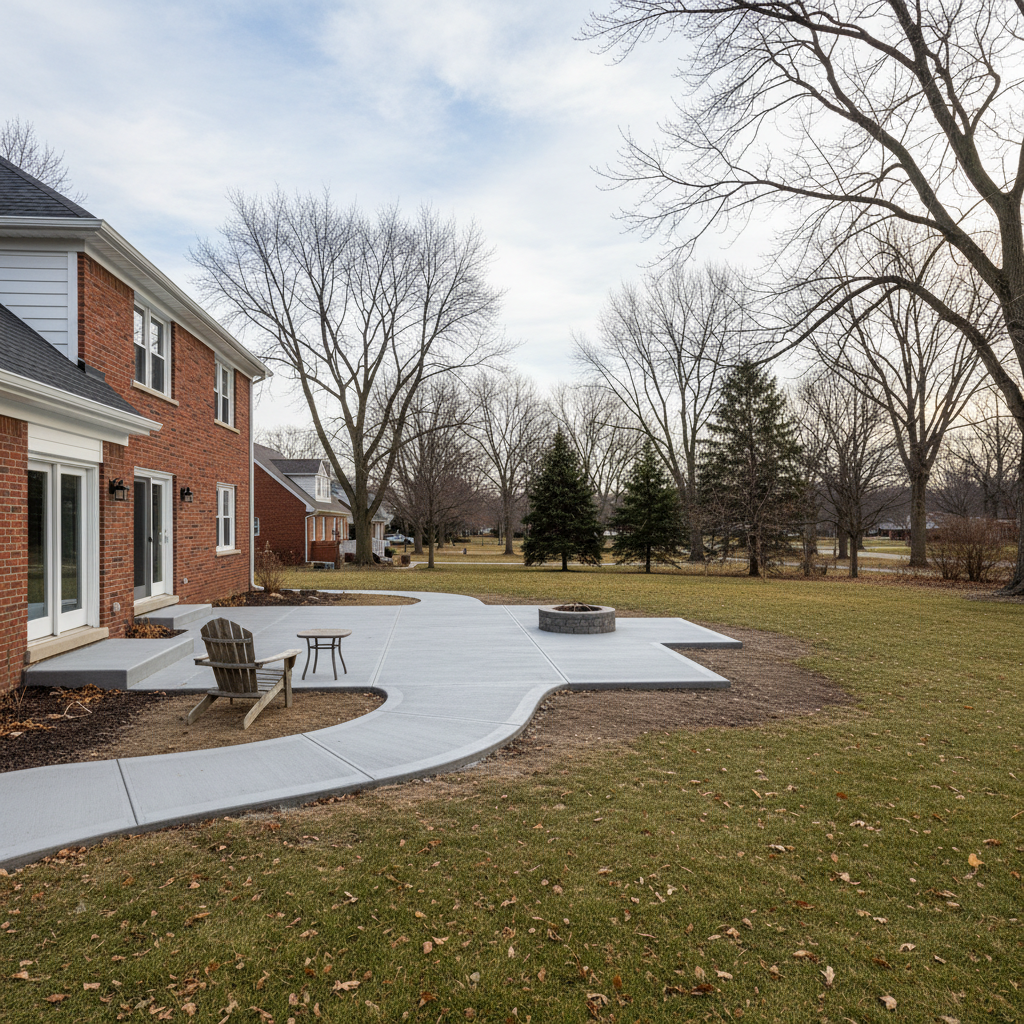
So, you're probably wondering when's the best time to get that new patio, driveway, or sidewalk poured, right? It's not just about picking a sunny day, especially here in Cicero. Our Illinois weather, with its crazy swings, really tells us what works and what absolutely won't for concrete flatwork. Honestly, I've seen too many folks try to rush a job or just ignore the forecast, and it almost always causes headaches down the road. Let's dig into what our local climate means for your concrete project and how you can keep it protected.
Timing Your Concrete Project: Temperature is Everything
The biggest thing for concrete isn't just whether it's raining; it's the temperature. Concrete needs to cure right, and that's a chemical process super sensitive to heat and cold. Ideally, we pour concrete when it's between 50 and 80 degrees Fahrenheit. If it drops below 40 degrees, the curing process slows way down, and the concrete won't get strong like it should. What you end up with is weak, brittle concrete that's just begging to crack and spall.
Too hot, though, and you've got another set of problems. When it's over 90 degrees, especially if the air is dry, the water in the mix evaporates way too fast. This can cause those little plastic shrinkage cracks before the concrete even has a chance to properly set. We definitely get our share of those scorching summer days here in August, so we're always glued to the forecast. That's why spring and fall are usually your best bets around here. April, May, early June, and then September and October often give us that perfect temperature window.
Rain, Snow, and Frost: Concrete's Arch-Enemies
Everyone knows you can't pour concrete in the rain, right? Well, it's a bit more complicated than that. A light drizzle might not be a huge deal if the concrete is already setting, but heavy rain? That can wash out the cement paste, weaken the surface, and leave it looking all pitted. We always keep a close eye on the radar, believe me. What's even worse than rain, though, is pouring concrete when there's a chance of freezing temperatures within the first day or two. Fresh concrete holds a lot of water, and if that water freezes, it expands. This causes internal damage that can totally destroy the concrete's strength. It's called 'freeze-thaw damage,' and it's a real killer for new pours.
Our winters here in Cicero, with those brutal freeze-thaw cycles we get, are particularly tough on concrete. That's why we just don't do big pours in December, January, or February. It's simply not worth risking your investment. Even if it's a mild winter day, the ground can still be frozen, which messes with the sub-base and can lead to uneven settling later on. We always make sure the ground is thawed and stable before we even think about starting a job.
Protecting Your Investment All Year Round
Once your concrete is in, you're not finished. You really need to protect it, especially with our local climate. Here's what I tell all my clients:
- Seal it: This is probably the most important thing you can do. A good quality penetrating sealer will protect your concrete from moisture, road salts, oil stains, and those damaging freeze-thaw cycles. I recommend putting on a new coat every 2-3 years, depending on how much traffic it gets and how exposed it is. Think of it like sunscreen for your concrete.
- Watch out for salts: We use a lot of de-icing salts on our roads and sidewalks here, especially around busy streets like Cermak Road. These salts are terrible for concrete. They speed up freeze-thaw damage. Try to use sand or non-chloride de-icers on your own property. Shovel early and often instead of relying on chemicals.
- Drainage is crucial: Make sure water flows away from your concrete, not towards it or pooling on it. If water sits on your patio or driveway, it's going to seep in and cause problems, especially when it freezes. Good grading around your flatwork is absolutely crucial.
- Clean it regularly: Sweep off dirt, leaves, and debris. Pressure wash it once a year to get rid of grime. Just be careful with the pressure washer; too high a setting can actually damage the surface.
- Look for cracks: Small cracks can show up, and that's often pretty normal with concrete. But if you see them getting bigger or new ones appearing, especially larger ones, it's worth having them checked out. Sometimes a small repair now can stop a much bigger problem later.
Look, concrete is tough, but it's not invincible, especially when it's up against our crazy Illinois weather. Doing it right the first time, with a crew that really understands these local conditions, makes all the difference. That's what we focus on at Ace Concrete Solutions. We're not just pouring concrete; we're building something that's going to last for you and your family for years to come. Don't hesitate to give us a call if you've got questions about your next project or how to care for your existing concrete. We're always happy to talk shop.