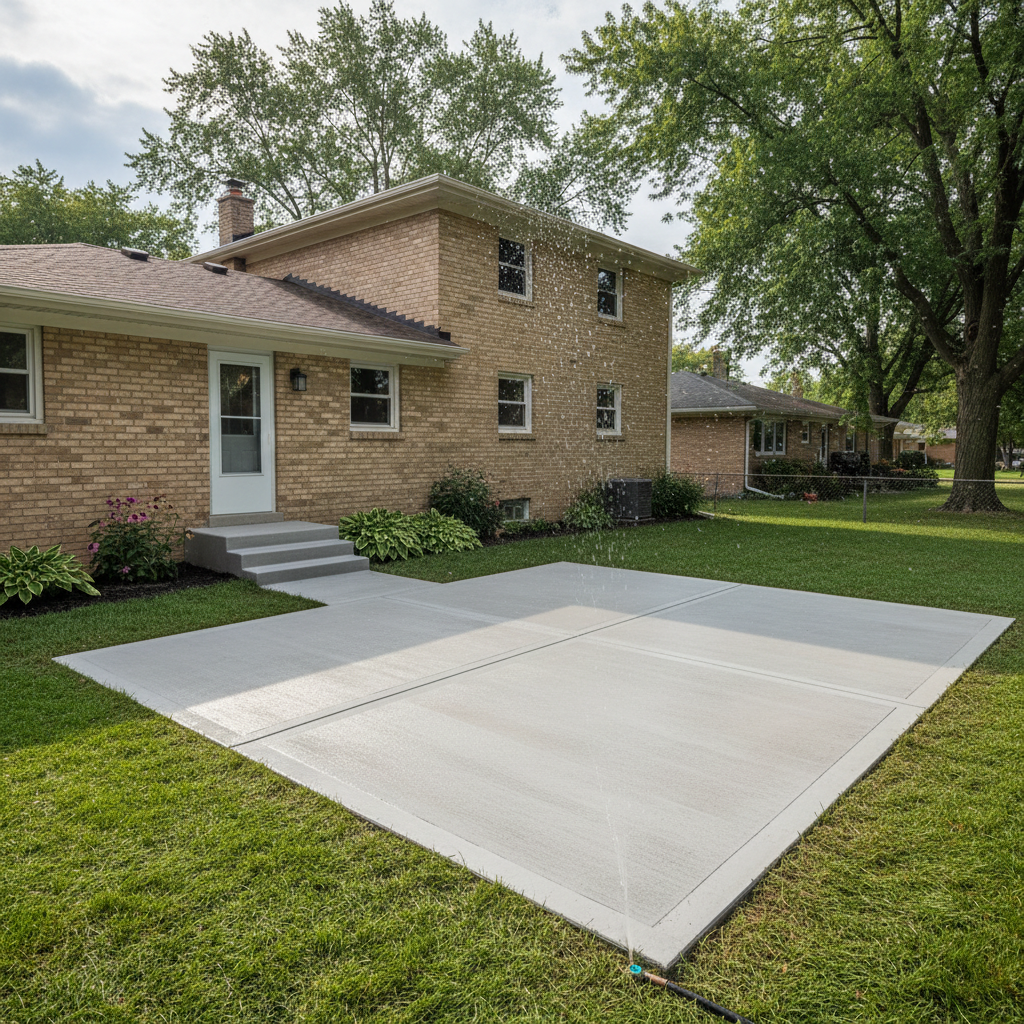
Alright, let's talk concrete patios. Everyone wants a nice outdoor space, especially when summer finally rolls around after a long Cicero winter. But I've seen too many folks jump into these projects without really thinking things through, and it almost always ends up costing them more time, money, and frustration.
You're putting money into your home, so you want it done right. Here are some of the biggest mistakes I see homeowners make when they're planning or hiring for a new concrete patio.
Mistake #1: Not Knowing Your Soil
This is a big one, and people often miss it. You can't just pour concrete on top of whatever's there and expect it to last. Especially around here, we've got a mix of soil types, and sometimes you're dealing with fill dirt or clay that expands and contracts. If you don't prepare the sub-base properly, your patio is going to crack, sink, or heave. It's not a question of 'if,' but 'when.'
A good contractor, like us at Ace Concrete Solutions, will always check your site's drainage and soil conditions. We might need to dig deeper, bring in gravel, or compact the ground more thoroughly. If a contractor just shows up, forms it up, and pours without even mentioning the ground underneath, that's a huge red flag. They're cutting corners, and you'll pay for it later.
Mistake #2: Focusing Only on the Lowest Bid
I get it, everyone wants a deal. But when it comes to concrete, the cheapest bid is rarely the best value. This isn't like buying a gallon of milk, you know? There's a lot of skill, proper materials, and specialized equipment involved.
- Low-ballers cut corners: They might use less rebar or mesh, skimp on the concrete mix quality, or rush the prep work.
- They're often uninsured: If something goes wrong, like damage to your property or an injury on the job, you could be on the hook. Always ask for proof of insurance and licensing.
- Their work won't last: You'll end up paying to fix or replace it much sooner than if you'd hired a reputable company in the first place. You're not saving money; you're just delaying the real cost.
Get a few quotes, sure, but compare them based on what they're offering, not just the final number. Ask what kind of concrete mix they're using, how they'll prepare the base, and what their warranty covers.
Mistake #3: Ignoring Drainage
Your patio needs to slope away from your house. Period. If it doesn't, water will pool against your foundation, and that's a recipe for disaster. We're talking basement leaks, foundation damage, and all sorts of expensive problems. I've seen this happen too many times in older homes around the Berwyn border where yards are tight and grading can be tricky.
A good contractor will plan for proper drainage. This might involve:
- A slight slope (usually 1/4 inch per foot) away from your home.
- Installing a channel drain if you have a tight space or an area where water naturally collects.
- Considering how the patio will affect existing downspouts and landscaping.
Don't let anyone tell you it's not a big deal. It's a very big deal.
Mistake #4: Not Getting Everything in Writing
This seems obvious, but people still skip it. A handshake agreement might feel friendly, but it won't protect you if things go sideways. Your contract should clearly outline:
- The exact scope of work (what's being done, where, and how).
- Specific materials to be used (concrete strength, rebar/mesh type, finish).
- The total cost and payment schedule.
- Start and estimated completion dates.
- Warranty information.
- Proof of insurance and licensing numbers.
If a contractor is hesitant to put everything in a clear, detailed contract, walk away. You need that paper trail.
Mistake #5: Not Thinking About the Finish and Maintenance
You're going to be looking at and walking on this patio for years. Don't just pick the cheapest finish. Do you want a smooth, broom, or stamped finish? What about color? Think about how it will look with your house and yard. Also, understand that concrete isn't maintenance-free. You'll need to clean and seal it periodically to protect it from our harsh Illinois weather, especially the freeze-thaw cycles that can really do a number on unsealed concrete.
Ask your contractor about sealing and what kind of maintenance they recommend. A good pro will give you honest advice, not just try to sell you the most expensive option.
Building a new concrete patio is a solid investment in your home. Just make sure you're doing your homework and asking the right questions. It'll save you a lot of headaches down the road.