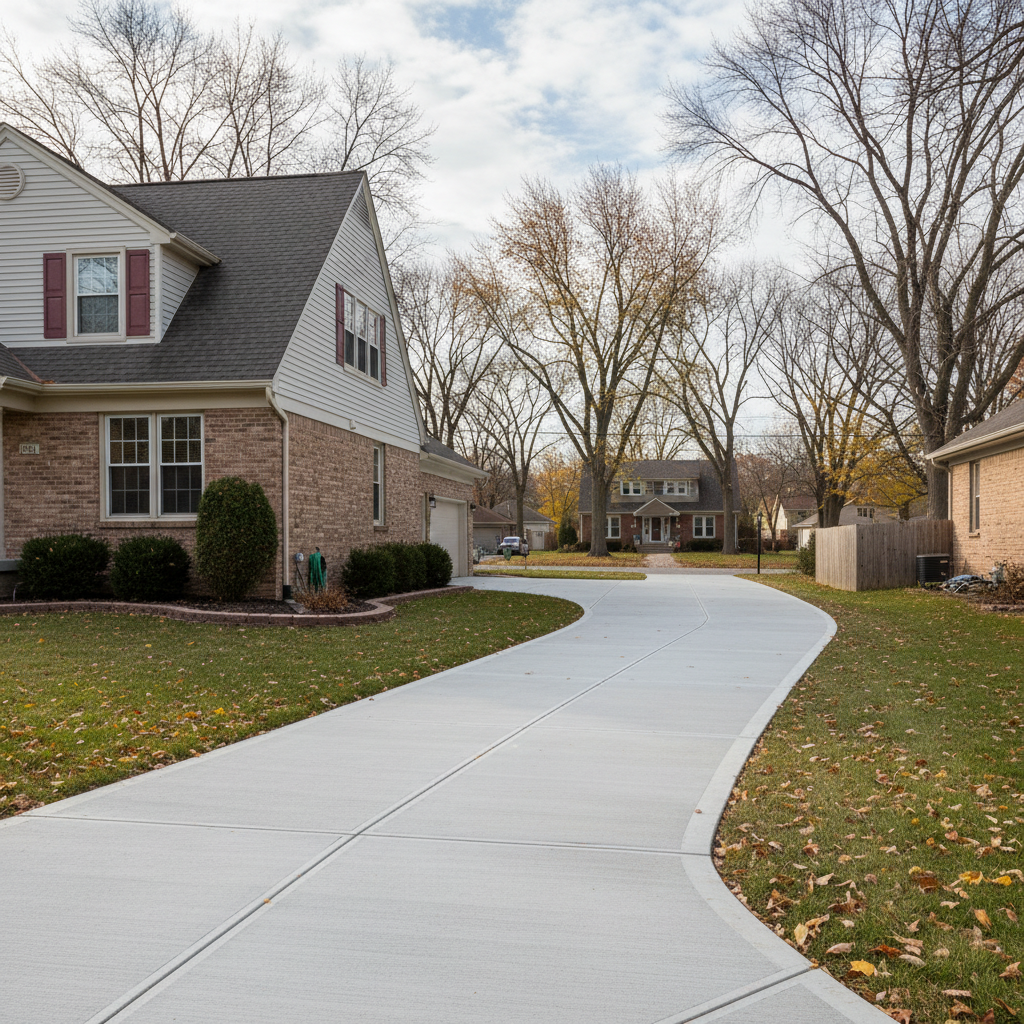
You want new concrete, right? Maybe a fresh driveway, a patio out back, or some new steps. The biggest question I get after "how much?" is always "when can you do it?" And let me tell you, timing isn't just about my schedule; it's about the weather, especially here in Cicero.
Why Illinois Weather Dictates Concrete Work
Concrete isn't like painting a wall. It's a chemical reaction, and that reaction is super sensitive to temperature and moisture. We've got pretty extreme swings here in Illinois, from scorching summers to freezing winters, and that means we've got specific windows when concrete work really shines.
Pouring concrete in the wrong conditions can lead to all sorts of headaches down the road. You're talking about cracks, spalling, and a surface that just doesn't hold up. Nobody wants that, especially not after investing in their home.
The Best Times: Spring and Fall
If you ask me, and most other experienced concrete guys around here, spring and fall are your sweet spots. Here's why:
Spring (Late April to Early June): The ground's thawed out, the days are getting longer, and temperatures are usually in that ideal 50-70°F range. We're past the worst of the freeze-thaw cycles that can mess with fresh pours, and it's not yet so hot that the concrete dries too fast. You get good curing conditions, which means stronger concrete.
Fall (Late September to Mid-November): Similar to spring, the temperatures are usually moderate. The ground is still warm enough from summer, which helps with curing. You just have to watch out for those early cold snaps. We've seen some years where it goes from 60 to 30 overnight, and that's not what you want for a new slab.
These seasons give the concrete the best chance to cure slowly and properly, developing maximum strength. It's like baking a cake; you don't want to rush it or burn it.
When to Be Wary: Summer and Winter
Can we pour concrete in summer and winter? Yeah, we can, but it comes with challenges and often extra costs or risks you should know about.
Summer (Late June to Early September): It gets hot. Really hot. Think about those 90-degree days with high humidity we get around Cicero, especially in August. When it's that hot, concrete can dry too fast, leading to surface cracks before it's even fully set. We have to take extra precautions: adding retarders to the mix, keeping the concrete wet, and working super fast. It's doable, but it's not ideal for every project.
Winter (Late November to Early April): This is the trickiest time. Concrete needs to stay above freezing for at least 3-7 days after it's poured to cure properly. If it freezes too soon, the water in the mix expands, creating internal damage that weakens the concrete. We can use heated blankets, accelerators in the mix, and temporary enclosures, but it adds significant cost and complexity. For most residential jobs, unless it's an absolute emergency, I'd tell you to wait until spring. Trying to pour in January when the ground is frozen solid down by the old Hawthorne Works site? Not a good idea unless you're prepared for a lot of extra work and expense.
What About Rain?
A little drizzle usually isn't a deal-breaker, especially if the concrete is already in place and we're just finishing it. But a heavy downpour? That's a problem. Too much water can dilute the concrete mix, weakening it and washing away the cement paste from the surface. We'll always keep an eye on the forecast and reschedule if it looks like a washout. It's better to delay a day or two than to have a compromised slab.
Protecting Your Investment Year-Round
Once your concrete is in, your job isn't over. Proper care helps it last longer, no matter when it was poured.
Curing: We'll make sure it's properly cured with water or curing compounds. Don't let it dry out too fast in those first few days.
Sealing: I can't stress this enough. Sealing your concrete every few years is like putting sunscreen on it. It protects against moisture, salt, oil, and those harsh freeze-thaw cycles we get. It's a small investment that pays off big time in longevity.
De-icers: Be careful with de-icing salts in winter. Calcium chloride and magnesium chloride are generally better than rock salt (sodium chloride), which can be really harsh on concrete, especially newer slabs. Sand is always a good, safe option for traction.
Drainage: Make sure water drains away from your concrete, not towards it or underneath it. Standing water is concrete's enemy.
Look, I've been doing this a long time with Ace Concrete Solutions. We know what works and what doesn't in this climate. When you're ready for new concrete, give us a call. We'll talk through the best timing for your specific project and make sure you get a slab that lasts.