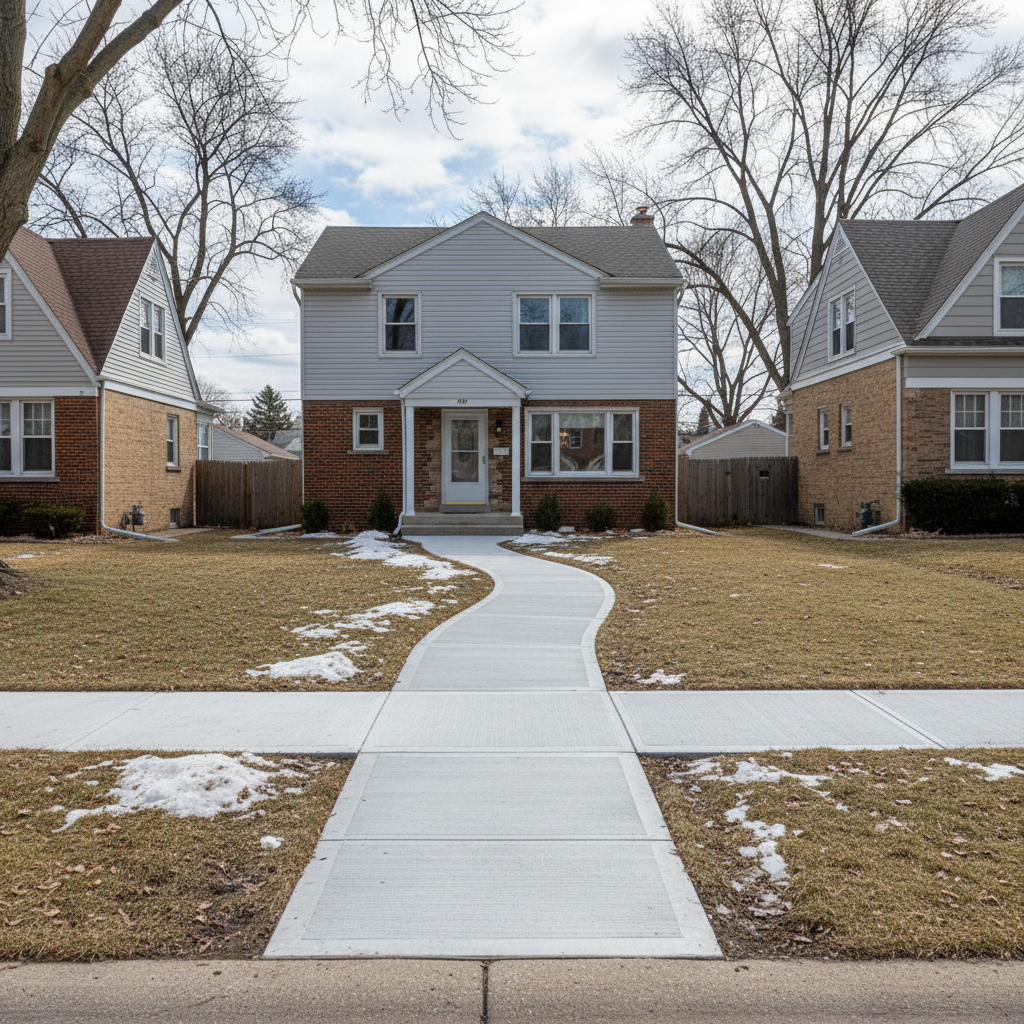
When's the best time to get your concrete sidewalks looked at or replaced? That's a question I hear a lot, especially as the seasons shift here in Cicero. You might think concrete is just concrete, right? But the weather we get in Chicagoland, from those brutal winters to our hot, humid summers, really dictates when we can do quality work and, more importantly, how long that work will actually last.
Timing Your Sidewalk Project: It's All About the Weather
Sure, you can pour concrete in a lot of conditions, but there's definitely a sweet spot. For sidewalks, we're usually talking about spring, late summer, and fall. Why those times? Because concrete needs to cure properly, and that means pretty stable temperatures.
- Spring (April to June): This is prime time. The ground's finally thawed out, and you've got consistent temperatures, typically between 50 and 70 degrees Fahrenheit. It's warm enough for the concrete to set up without drying too fast, but not so hot that it starts cracking before it's even fully cured. You'll spot a lot of us out working on sidewalks around the bungalows and two-flats in the Grant Works neighborhood during these months.
- Summer (July to August): It's doable, but it gets trickier. Hot, dry days mean the water in the mix evaporates way too quickly. That can lead to surface cracks, a weaker slab, and a lot more work for us to keep it properly hydrated. If we do pour in the summer, we're taking extra steps – using curing compounds, keeping it wet, maybe even working earlier in the morning.
- Fall (September to November): Another great window. The air's crisp, and the ground's still holding onto that summer warmth. Temperatures are usually falling, which is good for a slow, strong cure. You just have to watch out for those early freezes; you really don't want fresh concrete exposed to freezing temperatures too soon.
- Winter (December to March): For new pours? Forget about it. Seriously. The ground freezes solid, the air's too cold, and the water in the concrete will freeze before it cures, ruining the whole thing. Repairs? Maybe, if it's a small patch and we can tent and heat it, but it's not ideal and it's definitely going to cost you more. Best to just wait for spring.
What Weather Conditions Really Matter?
It's not just about the temperature, you know. A few other things play a big role:
- Rain: A light drizzle isn't the end of the world, but a downpour on fresh concrete is a disaster. It washes away the cement paste, weakens the surface, and can cause pitting. We're always glued to the forecast.
- Humidity: High humidity means the concrete dries slower, which is generally a good thing for strength. Low humidity, especially with wind, can dry it out too fast, leading to shrinkage cracks.
- Wind: Windy days, especially hot and dry ones, can also speed up surface drying and cause problems. We'll often put up windbreaks if we need to.
We're not just guessing out here; we're constantly monitoring these conditions. That's why scheduling can sometimes be a bit fluid. We want to do the job right, and that means working with Mother Nature, not against her.
Protecting Your Sidewalk Investment Year-Round
Once you've got a solid sidewalk, you want it to last, right? Here's how you protect it:
- Seal It: This is huge. A good quality penetrating sealer applied every few years (or as the product recommends) makes a world of difference. It repels water, which is the number one enemy of concrete, especially with our freeze-thaw cycles. Water gets in, freezes, expands, and cracks your concrete. A sealer stops that.
- Be Smart About De-Icers: I know you want to keep your sidewalks safe in winter, but be careful what you use. Avoid rock salt (sodium chloride) and anything with ammonium nitrate or ammonium sulfate. These chemicals are really harsh and will eat away at your concrete over time. Calcium chloride and magnesium chloride are better options, or even just plain sand for traction. Shovel early and often to minimize ice buildup.
- Clean It Regularly: Sweep off dirt, leaves, and debris. Power wash it once a year to remove grime and moss. Don't let organic matter sit on it, as it can hold moisture and promote staining or even growth that can damage the surface.
- Watch for Cracks: Small cracks happen, it's concrete, after all. But if you see them developing, especially if they're getting wider or showing signs of movement, don't ignore them. Get them sealed up to prevent water intrusion. A small repair now can prevent a big replacement later. That's where Ace Concrete Solutions comes in; we can assess what's going on and give you honest advice.
- Mind the Edges: Don't let heavy vehicles drive on the edges of your sidewalk if it's not designed for it. Over time, that can cause cracking and spalling.
Taking care of your concrete sidewalks isn't just about making them look good; it's about safety and longevity. A little proactive maintenance goes a long way in avoiding costly repairs down the road. We've seen plenty of sidewalks around Cicero that have lasted decades because someone took the time to care for them. And we've seen others fall apart in a few years because they were neglected. It's your investment; protect it.