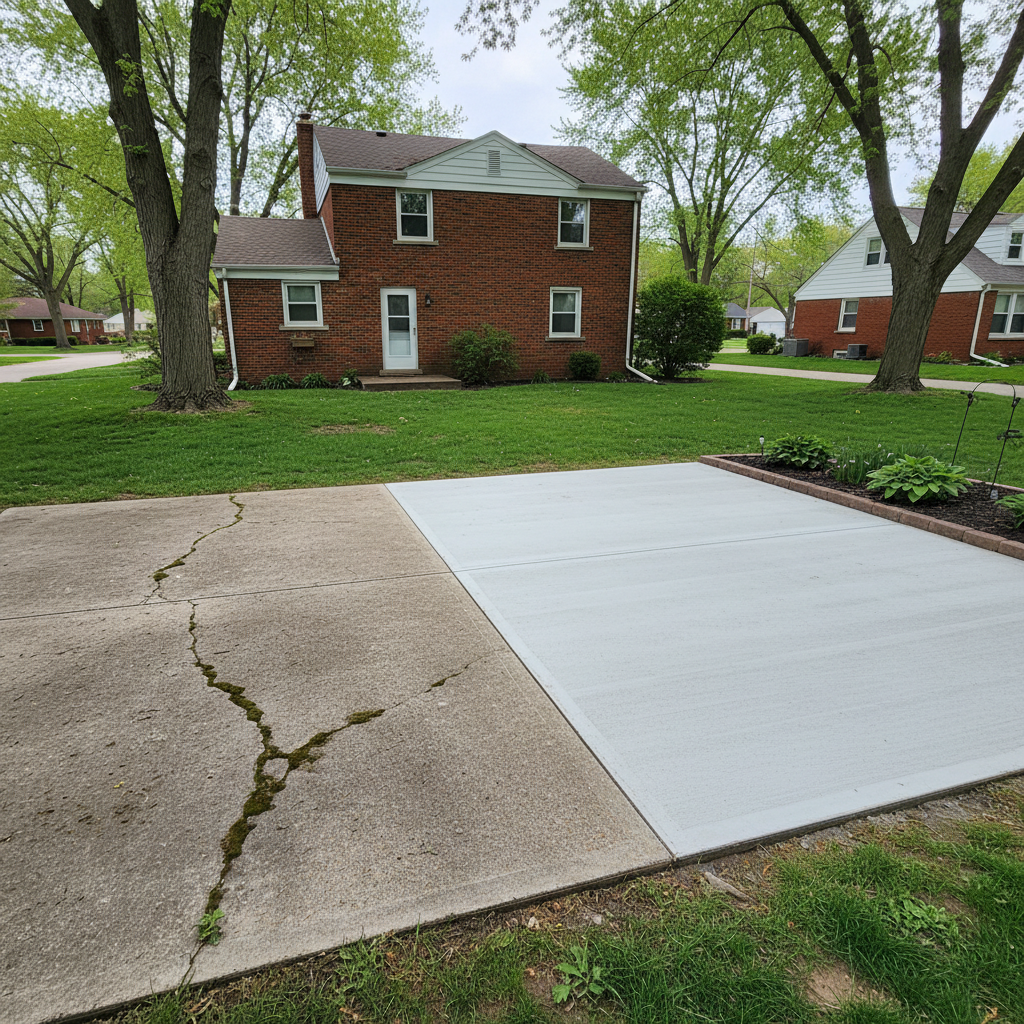
Your concrete driveway, patio, or sidewalk really takes a beating, especially here in Cicero with our wild Illinois weather. One minute it's freezing, the next it's thawing, and then we get heavy rains. That constant expansion and contraction, plus all the road salt, really does a number on concrete over time. Eventually, you're looking at cracks, spalling, or uneven sections. So, what's a homeowner to do? You've got two main routes: try to patch up the existing concrete, or just bite the bullet and replace it entirely.
Patching and Repair: When It Makes Sense
Patching concrete is often the first thing folks think about because, well, it seems like the cheaper, easier option. And sometimes, it absolutely is! If you've got a few isolated, hairline cracks, or maybe a small section that's spalled a bit, you can definitely extend your concrete's life with some targeted repairs.
Here's when patching might be a good idea:
- Minor Cracks: We're talking about cracks less than a quarter-inch wide that don't show signs of significant movement. You can fill these with a good quality caulk or epoxy filler.
- Small Spalled Areas: If the top layer of your concrete is flaking off in a small, contained spot, you can chip out the loose stuff, clean it thoroughly, and then apply a concrete resurfacer or patch material.
- Surface Imperfections: Maybe your concrete just looks dull or has some minor pitting. A thin overlay or resurfacer can give it a fresh, new look without needing a full replacement.
The biggest benefit of patching is definitely the cost. It's usually a fraction of the price of replacement, and it's less disruptive, too. You don't have to deal with demolition, hauling away old concrete, or waiting days for new concrete to cure before you can use it again. For a small patio in a relatively sheltered spot, or a side walkway that doesn't see heavy traffic, patching can buy you several more years.
But here's the catch, and it's a big one: patching is a band-aid. It doesn't fix the underlying problems. If your concrete is cracking because of poor sub-base preparation, or if it's heaving due to our clay-heavy soil expanding and contracting, those patches are likely to fail sooner rather than later. You'll see the cracks reappear, often right next to the patch or even right through it. What a pain!
Full Replacement: The Long-Term Solution
Now, let's talk about replacement. This is a bigger job, no doubt about it. It means breaking up the old concrete, hauling it away, preparing the sub-base properly, and then pouring fresh concrete. It's more expensive upfront, and it takes more time. So why would you choose this?
You should be thinking about full replacement if:
- Extensive Cracking: If your concrete looks like a spiderweb, with cracks running everywhere, or if the cracks are wide and show significant vertical displacement (one side is higher than the other), patching just won't cut it.
- Severe Spalling or Pitting: When large areas of the surface are crumbling, or the aggregate is exposed and breaking down, the structural integrity is compromised. A thin patch won't adhere well or last.
- Uneven Slabs/Heaving: If your concrete slabs are significantly unlevel, creating tripping hazards or drainage issues, that's usually a sign of a bad sub-base or severe settlement. You can try mudjacking for minor issues, but often, replacement is the only permanent fix.
- Poor Drainage: If your driveway or patio constantly pools water, it means the grade is wrong. Replacement allows us to regrade the area properly, making sure water flows away from your foundation.
- Old Age: Concrete doesn't last forever, you know? If your flatwork is 20, 30, or 40+ years old and really showing its age, even minor issues might be a sign it's just worn out.
The big advantage of replacement is that it's a fresh start. When Ace Concrete Solutions pours new concrete, we make sure the sub-base is properly compacted and graded. We use the right mix for our climate, and we include proper control joints. This means you're getting a brand-new, structurally sound surface that's built to last for decades. You get to choose the finish, the color, and you know it's done right from the ground up.
My Recommendation for Cicero Homeowners
Look, I've seen a lot of concrete in Cicero over the years, from the bungalows in the south end to the two-flats near Cermak. My honest take? If your concrete issues are minor – a few small cracks, a little surface wear – then a quality patch or resurface can absolutely buy you some time and save you money. It's a pragmatic choice for extending the life of otherwise sound concrete.
However, if you're dealing with widespread cracking, significant settlement, large areas of spalling, or if your concrete is just plain old and falling apart, don't throw good money after bad. Patching those kinds of problems is like putting lipstick on a pig; it might look better for a little while, but the underlying problem is still there, and it will resurface. In those situations, full replacement is almost always the better long-term investment. It costs more upfront, yes, but you get a beautiful new surface, and you won't be dealing with the same problems again in a year or two. You'll actually save money in the long run by not having to repeatedly patch or eventually replace it anyway.
Give us a call at Ace Concrete Solutions. We can take a look at your specific situation and give you an honest assessment of what makes the most sense for your home and your budget. We'll tell you if a patch will genuinely hold up or if it's time to rip it out and start fresh.