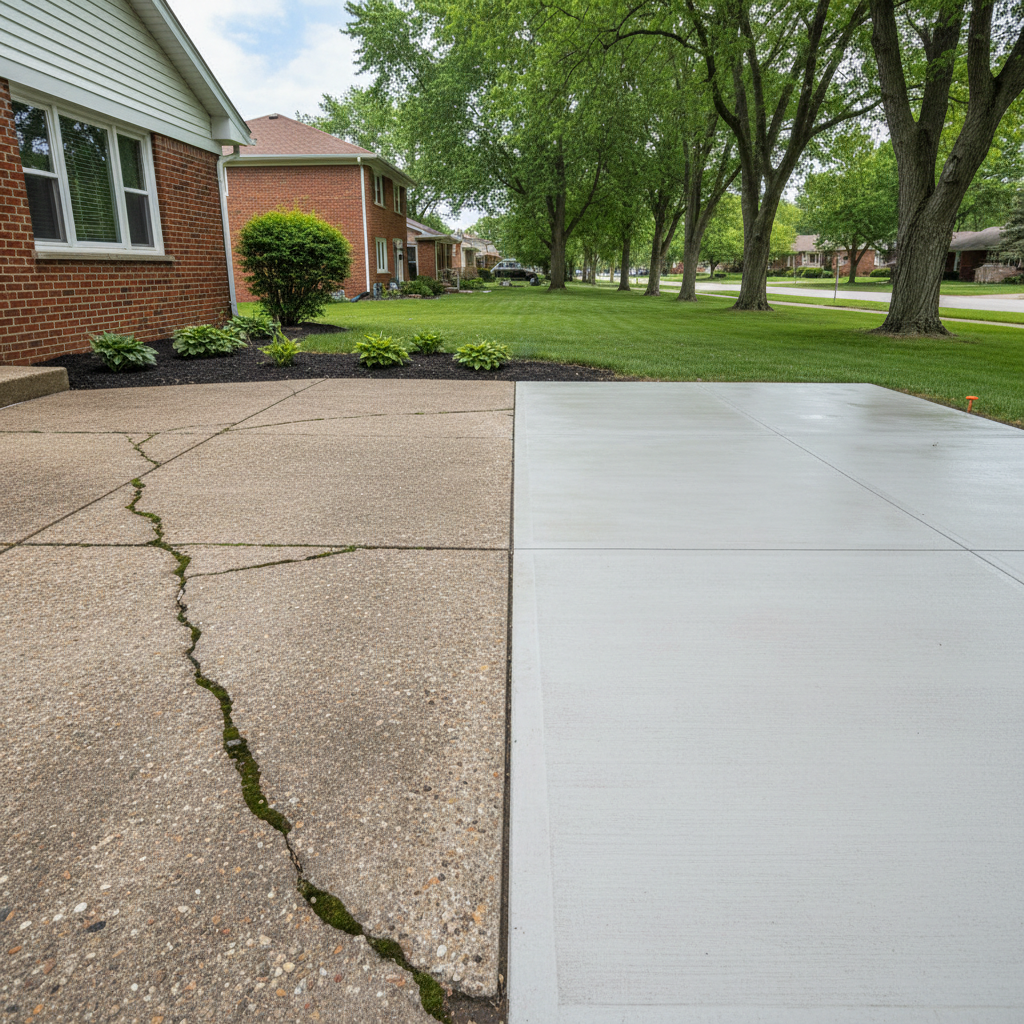
Got some tired-looking concrete around your place? Maybe it’s your patio, a walkway, or even the garage floor. It’s probably got cracks, stains, or just looks plain old. So, what’s the plan? Do you rip it all out and pour new concrete, or can you just cover it up with an overlay? That’s a common question I get from folks all over Cicero, from the bungalows near Berwyn Avenue to the bigger homes closer to the park.
Let’s talk straight about your options. There’s a time and a place for both, and picking the wrong one can really cost you—both in headaches and money down the road.
Option 1: Tear Out and New Concrete Pour
This is the big kahuna. When you go this route, we’re talking about completely removing the old concrete, getting the base underneath all prepped, and then pouring a brand-new slab. It’s a full reset, really.
Pros:
- Maximum Durability: You’re getting a fresh start. If we prepare the sub-base right and use quality concrete, a new pour will give you the longest lifespan. We’re talking decades if it’s done well and maintained.
- Structural Integrity: Is your old concrete severely cracked, heaved up, or does it have major drainage issues? A new pour lets you tackle those foundational problems head-on. We can fix underlying soil issues, improve drainage, and make sure you have a solid base. This is super important in places like Cicero, where we deal with clay soils that can shift with our freeze-thaw cycles.
- Complete Design Freedom: Want a different shape? A new texture? Need to change the slope for better water runoff? A new pour means you can do whatever you want. You aren’t limited by the existing footprint or its current condition.
- Higher Resale Value: A brand-new, perfectly installed concrete patio or driveway is a significant upgrade. Buyers definitely notice that kind of investment in your home’s infrastructure.
Cons:
- Higher Cost: No surprise here, right? Removing old concrete, hauling it away, and then pouring new material just takes more labor and more materials. It’s the most expensive option upfront.
- More Disruptive: There’s more noise, more dust, and definitely more heavy equipment involved. Your yard or driveway will be a construction zone for a bit longer.
- Longer Project Time: Tearing out, prepping, pouring, and curing all take time. You’ll need to factor in several days, sometimes more, depending on the project’s size.
Option 2: Concrete Overlays and Resurfacing
An overlay, which some folks call resurfacing, is when we put a thin layer of specialized concrete material right over your existing concrete. Think of it like a heavy-duty skin for your old slab.
Pros:
- Lower Cost: Generally, an overlay costs less than a full tear-out and replacement. You save on demolition and disposal, which is nice.
- Faster Installation: Without the demo phase, the project moves quicker. You can often have a refreshed surface in just a day or two, depending on the size.
- Less Disruptive: Less noise, less dust, and fewer heavy machines. It’s a cleaner process overall.
- Aesthetic Upgrade: Overlays come in all sorts of colors, textures, and patterns. You can get the look of stamped concrete, pavers, or even a smooth, modern finish without the full replacement cost.
Cons:
- Condition Dependent: This is the big one. An overlay is only as good as the concrete underneath it. If your existing concrete has major structural cracks, severe heaving, or is crumbling, an overlay isn’t going to fix those issues. It’ll just cover them up temporarily, and those problems will likely reappear through the new surface.
- Shorter Lifespan: While durable, an overlay typically won’t last as long as a properly installed new concrete slab. It’s a surface treatment, not a structural fix. You might get 5-15 years out of a good overlay, but a new pour can easily go 20-30 years or more.
- Limited Structural Improvement: You can’t change slopes for drainage or fix significant foundational problems with an overlay. What’s underneath is what you’re stuck with, structurally speaking.
- Potential for Delamination: If the surface isn’t prepped perfectly, or if water gets underneath, the overlay can delaminate—or peel off—over time.
So, What’s My Recommendation for Cicero Homeowners?
Look, I’ve been doing this concrete work for a long time here in Cicero. I’ve seen what our weather does to concrete – those brutal winters, the hot summers, and the constant freeze-thaw cycles. My honest advice?
If your existing concrete has significant structural issues – deep, wide cracks (wider than a credit card), noticeable heaving, crumbling edges, or major drainage problems – you need to bite the bullet and go with a full tear-out and new concrete pour. An overlay in these situations is just throwing good money after bad. It’s a temporary fix that won’t hold up to our Illinois conditions.
However, if your concrete is generally sound but just looks worn, faded, has minor surface cracks, or you just want a fresh new look, then an overlay can be a fantastic, cost-effective solution. It’s perfect for giving an old patio a facelift or sprucing up a garage floor that’s seen better days. Just make sure the underlying concrete is stable, okay?
Before you decide, get a professional opinion. We at Ace Concrete Solutions can come out, take a look at your specific situation, and give you an honest assessment. We’ll tell you if an overlay is a viable option or if you’re better off investing in a new slab. Don’t guess – let’s make sure you’re making the right choice for your home and your wallet.