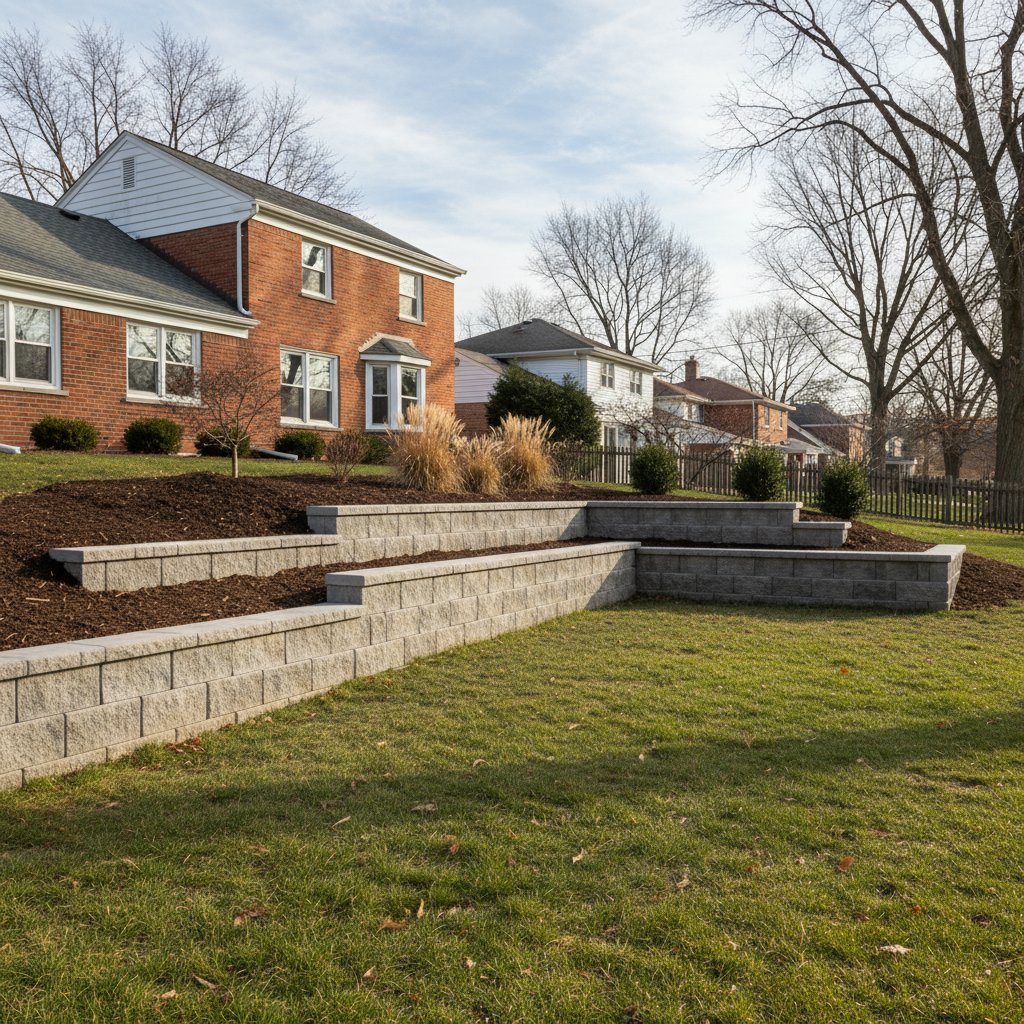
You're looking at your yard, maybe it's got a slope, or you just want to define a space. A retaining wall seems like a great idea, and it often is. But I've seen plenty of homeowners in Cicero make some real head-scratching mistakes when they're planning or hiring for these projects. You don't want to be one of them, trust me.
Mistake #1: Thinking It's Just a Stack of Blocks
This is probably the biggest one. A retaining wall isn't just about stacking some concrete blocks or pouring a slab. It's an engineered structure. It's holding back a whole lot of soil, and that soil gets heavy, especially when it's wet. Here in Cicero, with our sometimes heavy spring rains and the clay-rich soil we often find, that pressure can be immense. If it's not designed right, it's going to bulge, crack, or even fail. And when it fails, it's not just an ugly wall; it's a mess, a potential hazard, and a very expensive fix.
You need proper footings, good drainage behind the wall, and the right materials for the job. Don't let anyone tell you it's a simple DIY project unless it's a tiny, purely decorative garden border. For anything substantial, you need someone who understands the forces at play.
Mistake #2: Ignoring Drainage (The Silent Killer)
I just mentioned drainage, and it deserves its own point because it's so critical. Water is the enemy of any retaining wall. If water builds up behind the wall, it increases the hydrostatic pressure exponentially. That's how walls get pushed over. A good retaining wall design always includes a way for water to escape.
This means things like gravel backfill directly behind the wall, perforated drain pipes (often called 'weep holes' or 'French drains'), and sometimes even a geotextile fabric to prevent soil from clogging the drain. If your contractor isn't talking about drainage, that's a massive red flag. They're either cutting corners or they don't know what they're doing, and either way, you'll pay for it later.
Mistake #3: Picking the Cheapest Bid Without Asking Why
Everyone wants to save a buck, I get it. But with concrete work, especially something structural like a retaining wall, the cheapest bid is almost always the most expensive in the long run. When someone's bid is significantly lower than everyone else's, there's usually a reason. They might be:
- Using inferior materials that won't last.
- Skipping critical steps like proper excavation or drainage.
- Not insured or licensed, which leaves you exposed if something goes wrong.
- Not paying their crew a fair wage, which can lead to rushed or sloppy work.
Ask questions. Ask to see their license and insurance. Ask for references. Ask exactly what materials they're using and what their process is for drainage and footings. A reputable contractor, like us at Ace Concrete Solutions, will be happy to explain everything in detail. If they get cagey or can't answer your questions clearly, walk away.
Mistake #4: Not Checking for Permits or Property Lines
This one can get you into trouble with the village and your neighbors. Depending on the height and location of your retaining wall, you might need a permit from the Village of Cicero. If you build without one and it's required, you could face fines or even be forced to tear it down. That's a headache you absolutely don't need.
Also, make sure you know exactly where your property lines are. Nothing sours a neighborhood faster than building a wall that encroaches on your neighbor's land. Get a survey if you're not absolutely sure, especially if the wall is going to be close to the boundary. It's a small upfront cost that can save you huge legal bills and bad blood later.
Mistake #5: Not Considering Maintenance or Long-Term Durability
Once the wall is up, you want it to last, right? Some materials require more maintenance than others. Concrete block walls are pretty low maintenance, but they still need to be built right to prevent efflorescence or shifting. Poured concrete walls are incredibly durable if done correctly. Think about the long game. What's the climate like? How much freeze-thaw do we get here in Cicero? Those cycles put a lot of stress on concrete. A good contractor will factor that into their material and design recommendations.
Choosing the right contractor means choosing someone who understands these challenges and builds for the long haul. You want a wall that stands strong for decades, not one that starts leaning after a few seasons. Do your homework, ask the tough questions, and you'll end up with a retaining wall you can be proud of, not one you regret.